Chiang Mai
 By Cesar RodriguezUpdated
Chiang Mai is a 1h10-1h20 flight from Bangkok; November to January is cool, dry and clear, and March is the peak of the burning season.
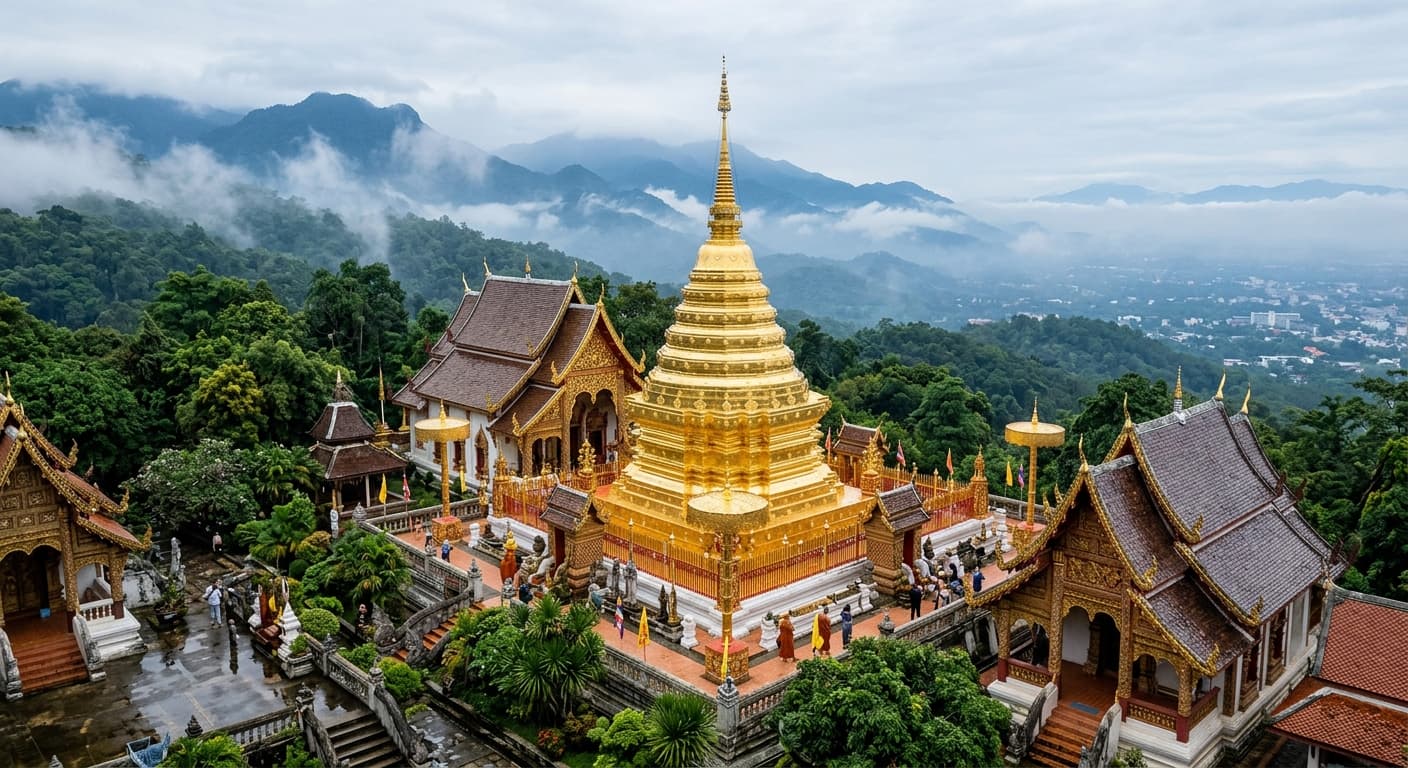
What it is good for: Chiang Mai suits slow stays built around temples, markets, northern food and day trips into the hills. Its elephant venues, covered in our elephant guide, range from observation-only to week-long volunteering. Timing matters more here than in most Thai cities, because the air changes sharply by season.
Areas to stay: The Old City inside the moat puts you within walking distance of the temples and the Sunday market, and suits first visits. Nimman, northwest of the moat, has the cafes and the newer bars and suits longer stays and remote workers. Both are walkable, and a songthaew or Grab covers the gap. We hold no district price bands for Chiang Mai, so check current rates before booking.
What to do: Doi Suthep is the temple on the hill above the city; dress code is covered shoulders and knees, and reports of the foreigner fee differ between 30 and 50 baht, so check at the gate. The Sunday Walking Street runs along Ratchadamnoen Road from Tha Phae Gate; the 2026 season was listed as 16:00-22:00 and free to enter. For elephants, our guide lists Elephant Nature Park at ฿2,500 for a half day and ฿3,500 for a full day (2026 prices, indicative). ChangChill is observation-only at ฿2,500 for a full day. World Animal Protection marks ChangChill elephant-friendly, but lists Elephant Nature Park separately, with a note that it is temporarily removed from its friendly list (list reviewed December 2025).
Nightlife: Venues inside the licensed zones, which include Chiang Mai, may stay open to 04:00; elsewhere bars close at 02:00. The drinking age is 20. Evening in the Old City centres on small bars and the market streets rather than clubs.
Food: Khao soi, the coconut curry noodle, is the dish people travel for, and Sunday evening on Ratchadamnoen is the place to eat it standing up with a dozen other northern dishes. Our street-food page has the wider picture.
When to go: Chiang Mai has 1 rain day in December and January, and highs of 29-30°C, with the clearest mountain views of the year. November has 3 rain days. March is 35°C in the burning season, and April reaches 37°C. August is the wettest month, with 17 rain days and about 223 mm. Loy Krathong and Yi Peng fall on the full moon, 24 November in 2026.
How many days: Three days covers the Old City temples, one hill trip and a market night. Add two for a full-day elephant or Doi Inthanon trip.
Getting there from Bangkok: The flight takes 1h10-1h20 and costs ฿1,000-3,500 one way, with roughly 25-30 departures a day across both airports (fares checked 7 September 2026). The sleeper train takes 11-14 hours at ฿768-1,038 for a 2nd class air-conditioned berth, and sells out days ahead in high season. The bus is ฿450-900 and takes 9h40-12h30.
What to watch out for: From about February to April, farmers clear fields and PM2.5 can reach Unhealthy or Very Unhealthy levels on the worst days, especially in March. Pack an N95 or KN95 mask, since cloth and surgical masks do not filter PM2.5, and check the daily reading. Rent a motorbike only if you know the deposit and passport rules, which our motorbike guide sets out. Do not leave your passport as a deposit.
Plan the rest: Our air-quality page shows today's reading, the weather page has the monthly climate, and the elephant-sanctuaries page lists all 16 venues. The Bangkok to Chiang Mai route page compares every option with fares.