Thailand Visa Checker
How long you can stay in Thailand, by nationality — visa exemption, visa on arrival, extensions, the DTV, and what the 2026 rule changes mean for your trip.
Last verified: 24 September 2026 against the lists published from the Interior Ministry notices and embassy announcements. Rules change often — always confirm on the official Thai e-Visa portal before booking.
Changed 15 September 2026: Visa-exempt stays cut from 60 days to 30
Every visa-exempt and visa-on-arrival nationality. What changed, and what to do about it
Two rule changes in the last month
- Visa-free entry dropped from 60 to 30 days on 15 September 2026, and the list shrank from 93 nationalities to 60 countries and territories (Royal Gazette, 31 August 2026).
- DTV rules tightened on 31 August 2026: applications only in your country of citizenship or permanent residence, and a criminal record certificate is now required.
A visa answers one question. For the rest of what the border asks for — arrival card, funds, onward ticket, and the vape, drone and cash rules — run the entry requirements checklist.
Who can enter visa-free
The lists below are the ones in force since 15 September 2026, as published by the Tourism Authority of Thailand from the Ministry of Interior notices. Correction, 24 September 2026: until today this page carried the lists as reported from the Cabinet decision, with India on visa on arrival, Maldives on 15 days, and Andorra, Monaco, San Marino and Vatican City on 30 days. The published lists put India and Maldives on 30 days, add Bhutan, Fiji, Georgia, Jordan, Kyrgyzstan, Taiwan and Ukraine, and leave the four European microstates out. A stay granted before 15 September runs its course (Newland Chase, 2 September 2026).
Visa exemption — 30 days (60 until 14 September 2026)
Extendable once by 30 days (฿1,900) at an immigration office.
Visa exemption — 15 days
The shorter tier, for two countries.
Visa on arrival — 15 days (฿2,000)
Reduced from 31 countries to 3.
Bilateral agreements — unaffected by the change
Separate treaties between Thailand and these countries; the 2026 revision doesn't touch them.
Any other nationality needs a visa before travelling — for tourism, usually the single-entry 60-day tourist visa (TR) via the official e-Visa portal.
Extending your stay
A visa-exempt entry can be extended once, by 30 days, for ฿1,900 at the immigration office that covers the address you are staying at. You'll need your passport, a completed TM.7 form, a 4 x 6 cm photo, ฿1,900 in cash and the TM.30 receipt your hotel or landlord gets when it reports your stay. Bangkok's office is at Chaeng Watthana (Government Complex, Building B); a stay in Samut Prakan, Suvarnabhumi hotels included, goes to Samut Prakan Immigration in Pak Nam instead. Chiang Mai, Phuket and Pattaya have their own offices. All of them close at weekends.
Under the 30-day rule that means up to 60 days in the country (30 + 30 extension). Under the 60-day exemption that ended on 14 September 2026 it was 90, and it still is for anyone stamped in for 60 days before 15 September: the extension rule itself did not change. No official notice spells that out, so bring the passport with the old stamp and expect the officer to check it.
The DTV after 31 August 2026
The Destination Thailand Visa (5 years, 180 days per entry, ฿10,000) remains open to remote workers, freelancers and "soft power" applicants (Muay Thai, cooking schools, medical stays), but two rules tightened worldwide on 31 August 2026:
- You must apply at a Thai embassy or consulate in a country where you are a citizen or permanent resident. Applying from a third country — the popular route via Vientiane, Phnom Penh or Kuala Lumpur — is no longer accepted.
- A recent criminal record certificate is now part of the required documents (validity requirements vary by embassy — London, for example, asks for one issued within six months).
Applications with the fee fully paid before 31 August 2026 are assessed under the previous rules.
A DTV stay is measured in months, which changes where you sleep: renting a condo short-term is illegal under 30 days, so the practical unit is a lease. Our Bangkok rent check has typical monthly ranges by district and the deposit norms, and where to stay for digital nomads compares the districts people on this visa actually pick.
Overstay: what it actually costs
Overstaying is a fine of ฿500 per day, capped at ฿20,000, paid when you exit. On top of the fine, longer overstays carry automatic re-entry bans if you leave on your own: 1 year for overstays over 90 days, 3 years over 1 year, 5 years over 3 years and 10 years over 5 years. If you're caught while overstaying — in a spot check or a raid — it's arrest, deportation at your own cost and a minimum 5-year ban.
Enforcement has visibly tightened in 2026, with immigration crackdowns on Samui, Phangan and elsewhere making the news all summer. If you're on overstay now, the least-bad move is always the same: go to the airport or a land border, pay the fine and exit cleanly — every extra day makes it worse.
Before you fly: the TDAC
Every foreign visitor must complete the Thailand Digital Arrival Card online within 3 days before arrival — it's free at tdac.immigration.go.th and replaced the old TM.6 paper form. Airlines increasingly ask for it at check-in. It's a registration, not a visa — it doesn't change how long you can stay.
Filing it and showing the QR code both need data, which is the argument for arranging a tourist eSIM before you land rather than queueing at an airport SIM counter.
The official video
Published by the agency that applies the rule, not by a travel channel. Nothing loads from YouTube until you press play.
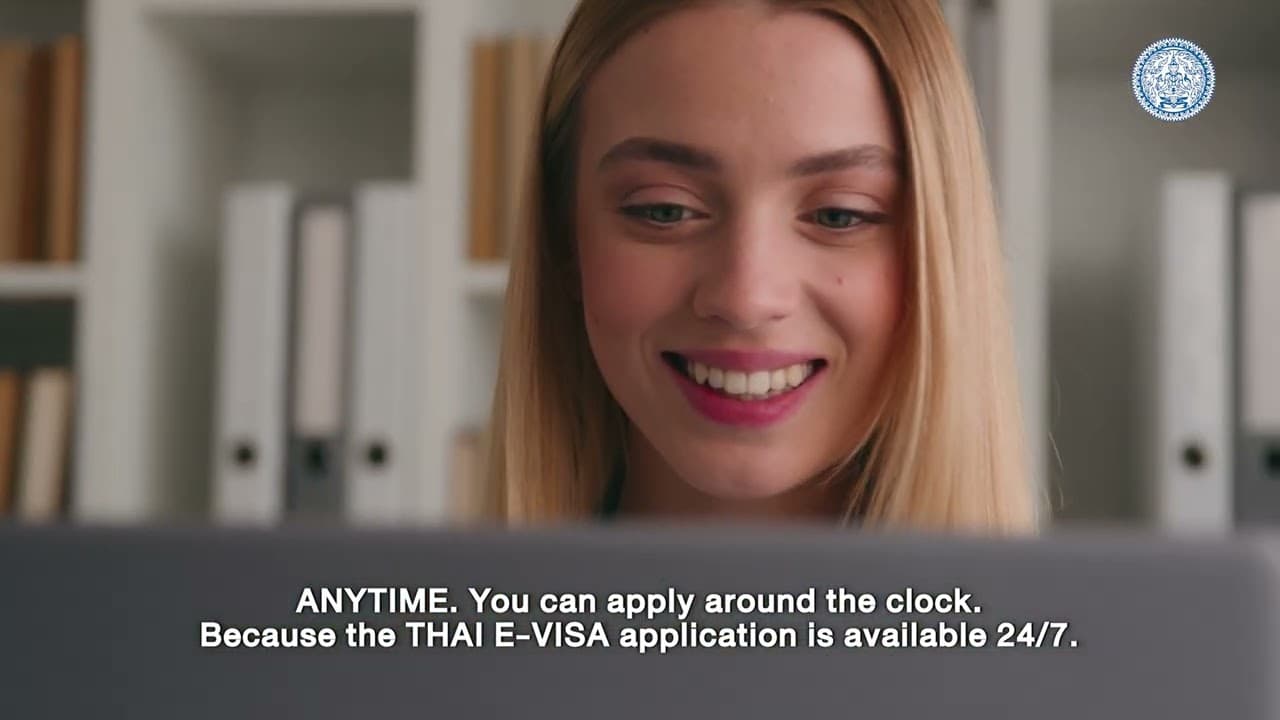 Play: THAI E-VISA Apply Anywhere Anytime
The Ministry's 2:07 introduction to thaievisa.go.th, the portal every visa application goes through: available in 15 languages, filed from anywhere, open around the clock. It is an overview of the site rather than a form walkthrough and quotes no fees or processing times; those are on this page.
MFA Thailand Channel (Thailand's Ministry of Foreign Affairs) on YouTube, 17 December 2024, 2:07. Checked 22 September 2026.
Frequently asked questions
How long can I stay in Thailand without a visa?
Since 15 September 2026, passport holders from 60 countries and territories, including the US, UK, most of the EU, Australia, Japan and India, get 30 days visa-free on arrival. Until 14 September it was 60 days for 93 nationalities. A one-time 30-day extension (฿1,900) at an immigration office remains available, so a visa-free trip now tops out at 60 days.
Is Thailand reducing the visa exemption to 30 days?
It already has. The Interior Ministry notices were published in the Royal Gazette on 31 August 2026 and took effect on 15 September 2026: 30 days for 60 countries and territories, 15 days for Mauritius and Seychelles, and visa on arrival for Azerbaijan, Belarus and Serbia only. India and Maldives, which the Cabinet coverage had put on visa on arrival and 15 days, ended up on the 30-day list. Anyone who entered before 15 September keeps the stay stamped on arrival.
Can I extend my stay in Thailand without leaving?
Yes. A visa-exempt stay can be extended once by 30 days for ฿1,900, at the immigration office that covers the address where you are staying (the next answer says which). Bring your passport, a TM.7 form, one photo and the TM.30 receipt for your address. Offices in Bangkok, Chiang Mai, Phuket and Pattaya handle thousands of these — go early in the morning. A 60-day stamp from before 15 September 2026 takes the same single extension, so those stays can still reach 90 days. We have not found an Immigration Bureau notice on that transition; the evidence is a first-hand report, posted on 25 September, of one such extension granted the day before.
Which immigration office handles my 30-day extension?
The one that covers the address you are registered at, which is the address on your TM.30: the residence report your hotel or landlord must file within 24 hours of your arrival (Immigration Act, section 38). Every Bangkok district, Bang Na, Prawet and Lat Krabang included, goes to Immigration Division 1 at the Government Complex, Building B, 2nd floor, Chaeng Watthana Soi 7. A stay in Samut Prakan province, which takes in Bang Phli and the hotels around Suvarnabhumi, goes to Samut Prakan Immigration at 5 Soi 2, Sutthiphirom Road, Pak Nam, not to Bangkok; that office moved back there from Bang Phli on 1 April 2024. Both open Monday to Friday 08:30 to 16:30, close for lunch from 12:00 to 13:00 and stay shut at weekends and on public holidays. Bring the TM.30 receipt: Chaeng Watthana has turned away extensions without one since March 2019. With it, a TM.7 form, ฿1,900 in cash, one 4 x 6 cm photo taken in the last six months, and copies of your passport photo page and entry stamp. Sources: Samut Prakan Immigration's contact page (updated April 2026) and area page; BAL's immigration alert of May 2019; office guides updated in September 2026. The Immigration Bureau's own page on which office covers which area did not load for us on 15 October 2026, so the area rule rests on those sources rather than its own wording.
What are the new DTV (Destination Thailand Visa) rules?
From 31 August 2026, DTV applicants must apply in a country where they hold citizenship or permanent residence — applying from a third country (such as inside Southeast Asia) is no longer accepted — and must include a recent criminal record certificate. Applications fully paid before 31 August 2026 are assessed under the old rules.
What happens if I overstay my visa in Thailand?
Overstaying costs ฿500 per day, capped at ฿20,000, payable when you exit. Overstays of more than 90 days trigger re-entry bans if you leave voluntarily: 1 year (90+ days), 3 years (1+ year), 5 years (3+ years) and 10 years (5+ years). Being caught while overstaying — for example in a spot check — leads to arrest, deportation and a minimum 5-year ban. If you're on overstay, go to immigration or exit and pay the fine as soon as possible; it gets strictly worse with time.
My visa-free stay ends during the Bangkok floods. Is there a grace period?
Not one we could find. As of 8 October 2026 there was no Immigration Bureau notice giving visitors extra days because of the flooding (we searched the English-language press and TAT's visitor updates of 13:00 on 28 and 29 September). Immigration has done it before, for a flood: an order of 27 November 2025 used Section 54 of the Immigration Act to waive overstay fines for tourists in eight southern provinces whose stay expired between 20 November and 31 December 2025 and who could not leave because roads or transport were cut (Khaosod English, 28 November 2025). And in March 2026 it waived overstay fines for anyone leaving the country after Middle East airspace closures stranded them (VisasNews, 4 March 2026). Until a notice appears, the normal rules apply: the ฿1,900 extension at an immigration office if you can reach one, or ฿500 a day of overstay paid when you leave, so two days late costs ฿1,000 and carries no ban. The Immigration Bureau's call centre is 1178, weekdays 08:30 to 16:30.
Do I need to fill in anything before flying to Thailand?
Yes — every foreign visitor must complete the Thailand Digital Arrival Card (TDAC) online within 3 days before arrival (tdac.immigration.go.th, free). It replaced the old TM.6 paper card. Airlines increasingly check for it at check-in.
Visa rules are one of the most-discussed Thailand topics anywhere — in August 2026 alone, 63 threads with nearly 3,000 comments on r/Thailand debated the changes above. Planning the trip itself? Start with the travel guides or check when to visit.
Related guides
All guides and tools
Staying
Moving around
Eating & going out
Rules & safety
Best of Thailand
https://bestofthailand.org/visa
Scan or type the address for opening hours, phone numbers and the map.